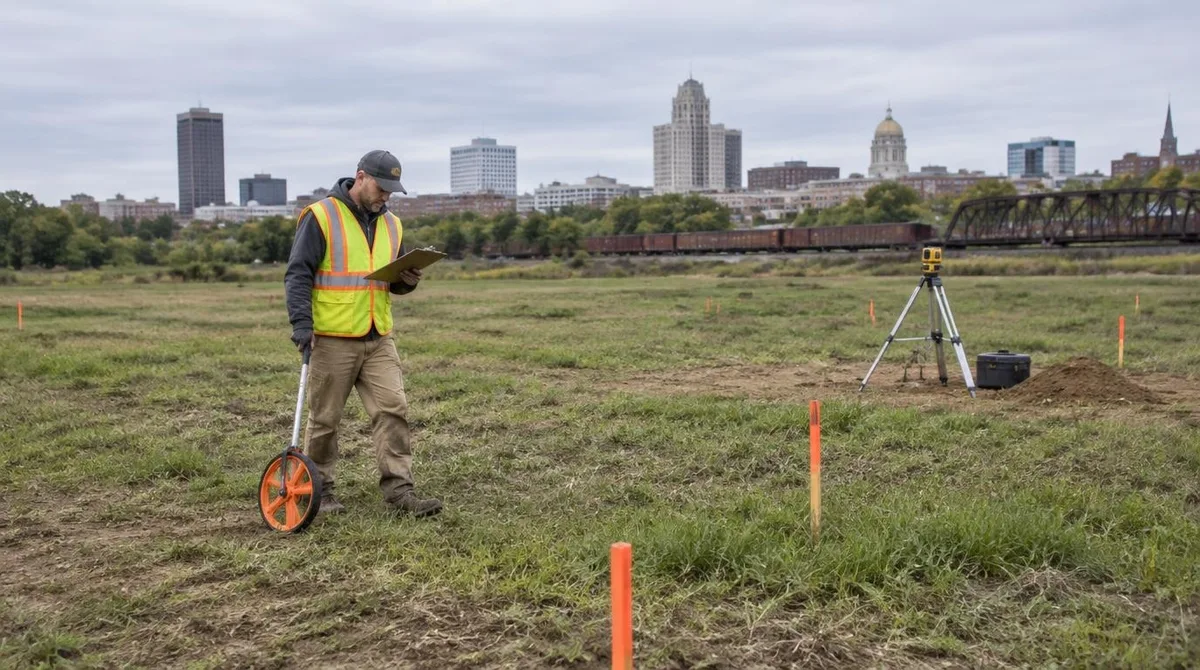
A Florida-based energy company called NextNRG wants to buy 33 acres in South Bend, Indiana, for a proposed data center and power project. The company announced Thursday that it signed a term sheet to buy the land from Envision South Bend LLC in a deal valued at $22 million, according to WNDU.
Here's the catch: that term sheet is nonbinding. The price and the whole arrangement remain subject to negotiation and other approvals, and no construction timeline has been given. So what got announced this week is a starting position, not a done deal.
Still, the outline is worth reading closely, because it says a lot about how data center projects are being assembled across the country right now — and about what a community can and cannot tell from an early announcement like this one. Stories like this matter well beyond one city; big-site deals reshape local tax bases wherever they land, which is something readers tracking business development in their own communities will recognize. Readers following this should also see Local History Projects: How Communities Keep Their Archives Alive. Readers following this should also see Local History Projects: How Communities Keep Their Archives Alive.
What is actually on the table?
The plan has three parts. About 27 of the 33 acres would go to what NextNRG calls the Lone Wolf Energy Center — data center infrastructure paired with on-site power generation and battery storage, according to WSBT. The company says the site could support up to 70 megawatts of capacity, and possibly as much as 100 megawatts.
For scale: a megawatt is a unit of power, and the 70- to 100-megawatt figures come from NextNRG's own announcement, not from any independent assessment. Data centers at this size need serious electricity, which is exactly why NextNRG is framing itself as an energy company first. It says it would focus on the power side — generation, storage and a microgrid, meaning a small self-contained power system — while a separate, unnamed partner would handle the computing operations. We covered a connected angle in Small business owner — Behind the counter: what it actually takes to run a Main Street shop. We covered a connected angle in Small business owner — Behind the counter: what it actually takes to run a Main Street shop.
The third piece is the most concrete. The property includes an existing 50,000-square-foot building, and NextNRG says a pharmaceutical company has already signed a binding 10-year lease for it. That lease only takes effect if NextNRG or its designated subsidiary actually buys the property.
Why the fine print matters more than the headline
Reading the two announcements side by side, the asymmetry is striking. The data center is a proposal. The lease is binding. In a deal like this, the signed lease is doing real work: it gives the buyer a committed tenant and, presumably, a reason to close. The data center itself depends on a partner that has not been named, definitive agreements that have not been signed, and approvals that have not been granted.
That is not a red flag by itself. Early-stage land deals are announced this way all the time, and a term sheet is a normal tool for locking in exclusivity while the paperwork gets built. But it does mean residents and local officials should treat the megawatt figures and the $22 million price as opening numbers, not settled facts. WSBT reported that there is no word yet on the timeline for the negotiation or approval process.
What the announcement does not say
The gaps are as informative as the details. According to WNDU, the news release does not identify the property's address, the pharmaceutical tenant or the computing partner. It offers no construction timeline, no job estimates and no specific figures on community impact — the things a city actually needs to evaluate a project like this.
- No address for the 33-acre site.
- No name for the pharmaceutical tenant or the computing partner.
- No construction timeline.
- No job estimates or community-impact figures.
For a city weighing a land sale and, eventually, likely incentives or utility commitments, those omissions are the ones to watch. A 70- to 100-megawatt facility raises real questions about where the power comes from, what the water and grid demands look like, and what the tax picture becomes once the land changes hands. None of those questions can be answered from a term sheet.
What happens next
The near-term milestones are easy to name, even if their dates are not: a definitive purchase agreement replacing the term sheet, the approvals NextNRG referenced, and — eventually — identification of the computing partner and the tenant. Until then, the binding pharmaceutical lease is the one hard commitment on the table, and even it evaporates if the purchase falls through.
The honest read is that South Bend has a serious company at the table with a real number attached, and nothing more. The next announcement, whenever it comes, will tell residents whether this was a trial balloon or a project. Cities everywhere are learning to read these early releases carefully — the difference between a proposal and a project is where the leverage lives.