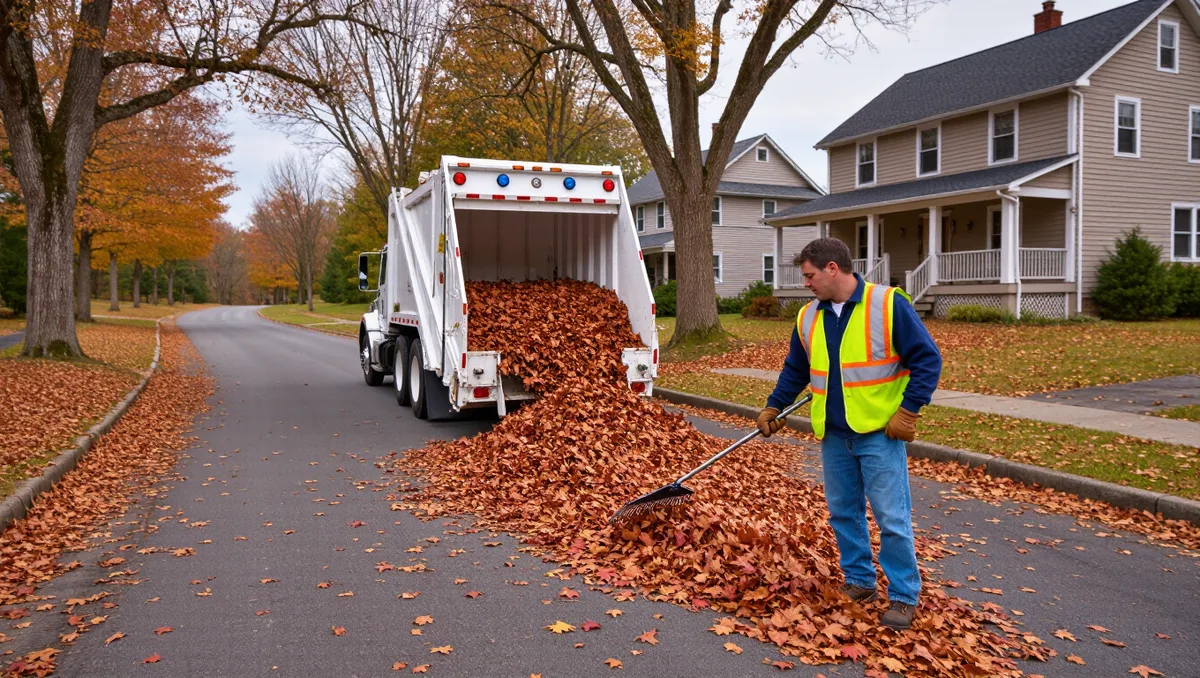
Every fall, the same scene plays out on streets from New City to Suffern: a neat mountain of leaves at the curb, and a neighbor wondering why the truck rolled past without stopping. The answer almost always comes down to the calendar. Leaf pickup runs on a schedule each town's Department of Public Works sets in advance, and a pile that shows up on the wrong week, or in the wrong container, is a pile the truck is allowed to leave behind.
This guide explains how seasonal yard waste collection works, why the rules differ from one municipality to the next, and what a resident can do to avoid the most common reasons for a missed pickup. The details live with each town and village, so the durable advice here is about the system itself: how the crews work, what the rules generally cover, and where to confirm your own street's dates.
How does a leaf pickup schedule actually work?
A leaf pickup schedule is a rotating route plan. Public works crews divide the municipality into zones, then sweep through them in order, usually starting in one corner of the town and working across. Most Rockland municipalities run the heaviest collection in late October and November, when the maples and oaks drop at once, with lighter rounds before and after.
The key thing to understand is that a zone is not a day. A zone can take several days to clear, and weather pushes everything around. A heavy rain or an early snow slows the vacuum trucks, and crews often pivot to storm cleanup, leaving leaves for later. That is why towns publish a window rather than a guarantee, and why the pile you raked on Monday may not be gone until the following week.
Schedules are typically posted on the town or village website each fall, and many offices will confirm your street's zone by phone. When in doubt, call before you rake. It is a faster answer than watching the truck pass.
What counts as yard waste, and what doesn't?
Leaf season and yard waste season are related but not identical programs. Loose leaves raked to the curb are the classic fall pickup. Brush, branches, and garden debris usually follow different rules, and mixing them is the fastest way to get skipped.
The general pattern across the county's municipalities:
- Loose leaves — raked to the curb or shoulder, away from storm drains, during the announced leaf season.
- Bundled or containerized yard waste — grass clippings, small trimmings, and plant matter, usually in open containers or biodegradable paper bags on regular collection days.
- Branches and brush — often handled separately, with limits on length and diameter, and sometimes requiring a call ahead for a special pickup.
The specifics vary by municipality, and they matter. A village may want paper bags only; a town may take loose leaves but not bagged ones. The town or village DPW page, or a posted notice, is the authority for your address. Rockland Green, the county's solid waste authority, also runs drop-off programs for materials curbside crews won't take, including household hazardous waste events that are free for residents. We covered a connected angle in New City: Rockland County correction officer exam application window closes June 12.
Why do the rules differ between towns?
Each municipality runs its own Department of Public Works with its own equipment, contract terms, and stormwater obligations. A town with a large vacuum truck fleet can handle loose curbside piles efficiently. A smaller village may rely on its regular sanitation crew and prefer bagged material that fits the same trucks used year-round.
There is also a regulatory reason behind the placement rules. Leaves raked into a storm drain clog the drain and feed nutrients into the streams and the Hudson. That is why nearly every DPW asks residents to keep piles on the lawn side of the curb, not in the roadway or over a drain grate. It is not fussiness; it is flood prevention and water quality in one instruction.
Timing rules follow the same logic. Leaves left at the curb for weeks before collection can wash into drains during a storm, so many municipalities ask residents not to put piles out until close to their zone's window. Rake early, pile late, is the version that fits on a refrigerator note.
What are the most common reasons a pickup gets missed?
Missed pickups are rarely random. The same handful of problems account for most of them, and all are avoidable:
- Wrong week. The pile went out outside the zone's announced window, so the crew had already passed or hadn't started.
- Wrong material mixed in. Branches, rocks, or trash in the leaf pile. Crews can't vacuum debris that jams equipment, and a contaminated pile may be left entirely.
- Wrong placement. Piles in the roadway, over a storm drain, or blocking a sidewalk or hydrant.
- Bagged when loose was required, or loose when bags were required. Check which your municipality wants before the pile hits the curb.
- Weather detours. Snow or heavy rain pushed the route back. The pile isn't rejected; it's just later.
If a pickup is missed within the correct window with a compliant pile, the fix is the same everywhere: call the DPW office directly. Most departments will send a truck back or add the street to the next pass. Social media complaints, satisfying as they are, reach no one who operates a truck.
What this means for your fall routine
The practical version is short. Find your municipality's posted leaf schedule in early fall and note your zone's window. Rake as needed through the season, but place the curbside pile close to the collection window, on the lawn, clear of drains and sidewalks. Keep branches and trash out of the pile, and follow the bagging rule your DPW states. If something goes wrong, a phone call to the department resolves it faster than anything else.
For context on how other county services run on their own calendars, our coverage of Rockland Green's hazardous waste drop-offs shows the same pattern: a published schedule, posted rules, and free service for residents who follow both. For related coverage, see Pomona: Rockland Green's 2026 hazardous waste drop-offs run weekdays and select weekends, free for residents.
Leaf season rewards the residents who read the notice. The truck will come. It just needs to find your pile where the rules say it should be.