Business profiles the county's commercial life: independent shops in Nyack and Suffern, restaurants, contractors, medical practices, industrial park tenants and the Palisades Center. Coverage includes openings, closures, ownership changes, hiring, and the permitting and parking questions deciding whether a storefront stays occupied.
Rockland employers and storefronts profiled: openings, closures, ownership changes and the rent, parking and permit problems standing behind each of them.
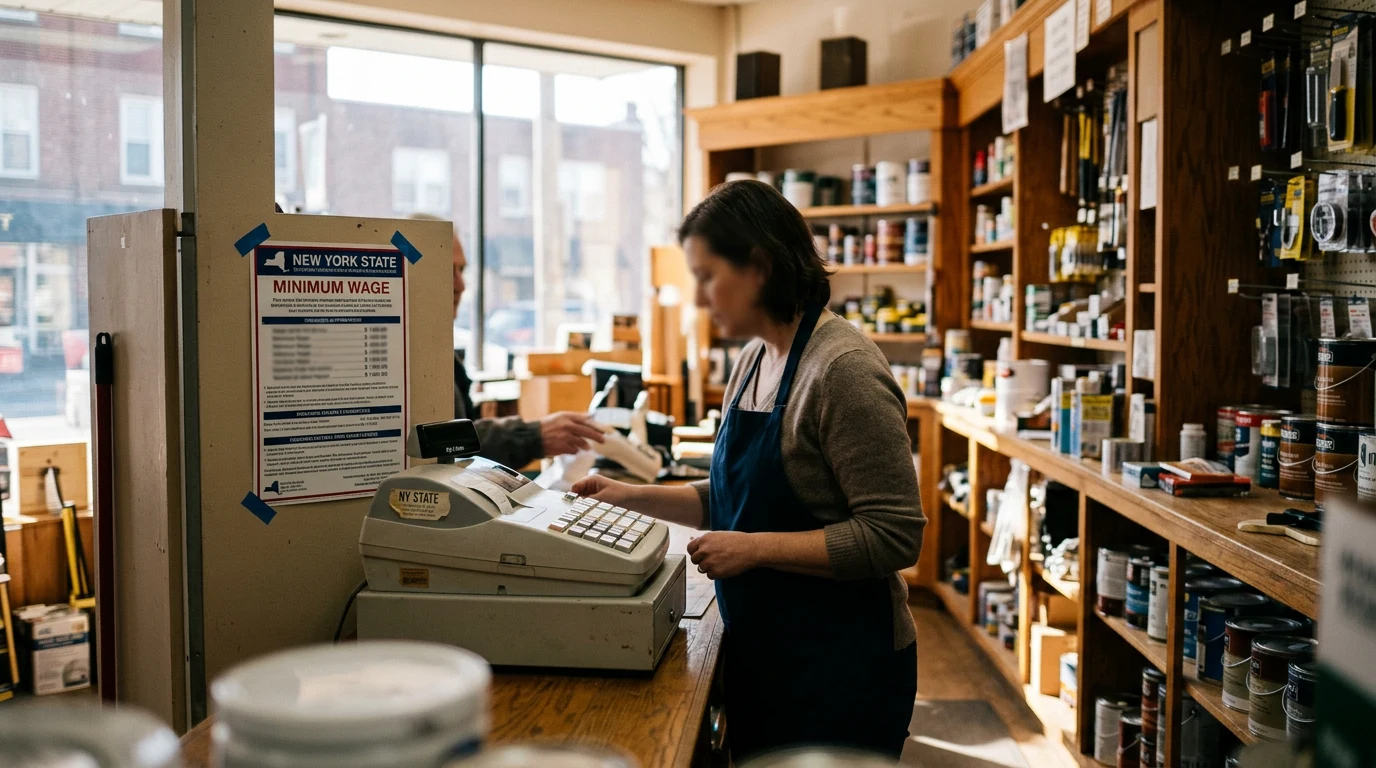
New York's minimum wage law splits the state into two tiers, and Rockland sits in the lower one. Here's what local employers and workers need to know before the rules change again.
State parks, boat launches and village sidewalks along the Palisades form a tourism corridor that feeds restaurants, outfitters and shopkeepers from Piermont to Stony Point.
Good Samaritan and Montefiore Nyack sit at the center of the county's healthcare economy, joined by state-run institutions that make medicine Rockland's most dependable payroll.
Before you hand over a deposit for a roof, a kitchen or a deck, each Rockland town has its own licensing office, complaint process and rules for home improvement contractors.
Listing aggregators put Rockland County's entire office inventory at roughly 6.3 million square feet, with asking rents in the low $20s — numbers that say more about the county's structure than any single deal.
Fourth- and fifth-generation family farms in the Ramapo valley have turned pick-your-own apples, farm stands, and school tours into a working economic engine.
From a waterfront dining room on Spear Street to Southeast Asian cooking on Main Street, Rockland's dining scene keeps adding seats as operators bet on river towns and hamlet centers.
Rail platform parking lots, morning coffee runs, and an after-dark dinner crowd — the daily commute to Manhattan quietly sets the rhythm for Rockland's local businesses.
From registering with New York State to a village sign permit in Nyack or a health permit in Ramapo — the sequence of approvals a Rockland entrepreneur actually faces.
West Nyack's four-floor giant opened in 1998 as one of the largest malls in the country — the story of how American retail changed around it, and how the mall is adapting.