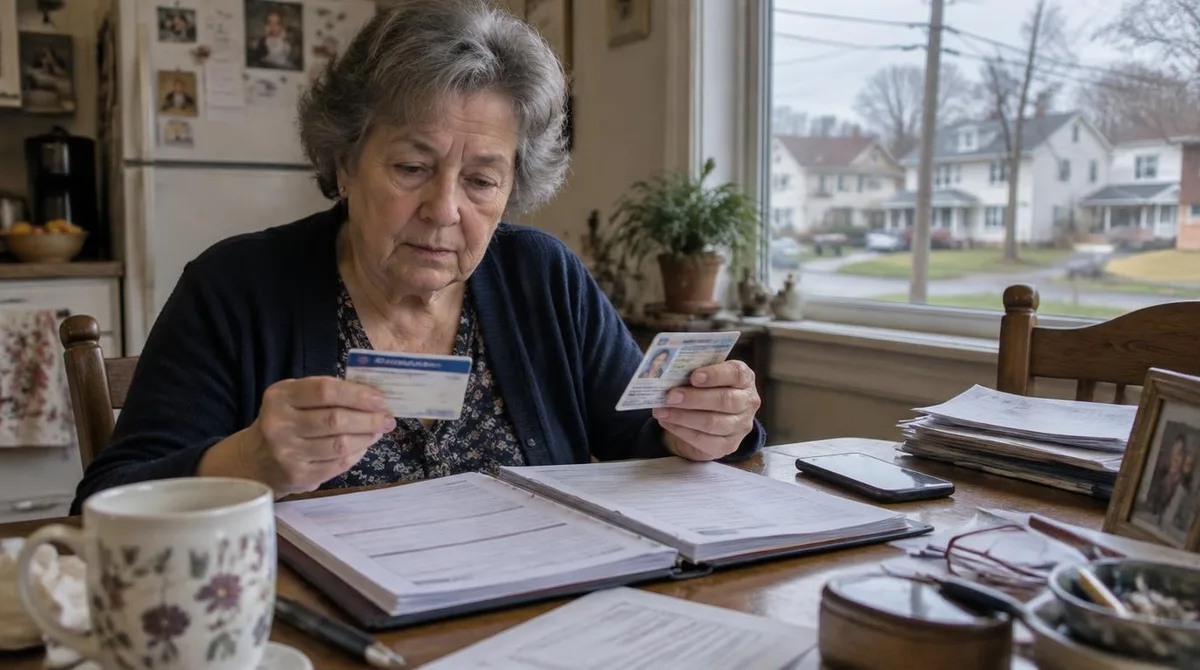
Snap a photo of your Medicaid card and your driver's license, and you may be most of the way to a cheaper phone bill. Lifeline, the federal program that pays $9.25 a month toward phone or internet service, is older than most people realize and far easier to qualify for than the paperwork suggests. The catch that trips people up: it is one benefit per household, and it applies to phone or internet, not both.
According to USAGov, Lifeline helps people with low incomes get discounted telephone or internet service, and eligibility rests on your income, your household size, and whether anyone in the home receives benefits from a federal assistance program. The program is run by the Federal Communications Commission and a nonprofit called the Universal Service Administrative Company, or USAC.
Here is what Rockland County residents need to know about who counts as eligible, which documents to pull together, and how the application actually works. If you are sorting through a tight household budget, our government coverage follows the programs and agencies that touch family finances, and this one is federal rather than county-run. We covered a connected angle in How the Rockland County Legislature works: 17 seats, votes and public hearings.
What exactly does Lifeline pay for?
According to Utility Benefits' Lifeline guide, the standard benefit is $9.25 a month off home internet or phone service. Households on federally recognized tribal lands qualify for a larger discount of $34.25 a month, though that does not apply in New York's lower Hudson Valley. The benefit is a household-level discount, not a per-person one, so a family of five gets one benefit, not five.
The one-or-the-other rule matters when you decide how to use it. Lifeline can sit on a mobile phone plan or a home internet bill, but a household cannot split it across both. The same guide notes that some internet providers run their own separate low-cost programs that can be combined with Lifeline applied to phone service, which is one way households stretch the discount further. The program is funded through a small surcharge on most American phone bills, not through county or town budgets.
Who qualifies in Rockland County?
There are two doors into the program, and most people walk through the easier one. The categorical path: if anyone in your household receives SNAP, Medicaid, Supplemental Security Income, Veterans Pension or Survivors Pension, or Federal Public Housing Assistance, you qualify automatically, regardless of income.
The income path is for everyone else. USAC, which administers the program, says a consumer qualifies if household income is at or below 135 percent of the federal poverty guidelines. For a one-person household, that works out to $20,331 a year, or about $1,694 a month. A four-person household qualifies up to $42,120 a year. Each additional person adds $7,263 to the ceiling. Those thresholds are updated each January, and Alaska and Hawaii use higher figures.
One practical note: if you are on SNAP, Medicaid, or SSI, you should not need to document income at all. Proof of the benefit itself does the work.
How do you apply?
The application runs through a federal portal, not through your town hall or the county. The process generally looks like this:
- Check eligibility using the tools at lifelinesupport.org, the program's official support site.
- Gather documents. For the categorical path, that means one document showing current participation in a qualifying program, plus a government-issued photo ID and proof of address such as a utility bill or lease.
- Apply through the National Verifier, the FCC's centralized eligibility portal at checklifeline.org. Most states use it; California, Texas, and Oregon run their own versions.
- Wait for verification. Categorical applications typically clear in 24 to 72 hours; income-based applications take longer.
- Choose a participating provider and apply the discount to your service.
USAGov notes that you can apply online, by mail, or through a phone or internet company, and that online and mail applicants may need to submit documents proving eligibility. If something goes wrong after you are enrolled, the Lifeline Support Center is the contact for service issues, though some complaints go to your phone company instead.
Which documents should you have ready?
For categorical eligibility, the list is short: a document showing current participation in the qualifying program, such as a SNAP award letter, a Medicaid card, or an SSI award letter, plus photo ID and proof of address. The key word is current. An expired letter can slow the process down.
For income-based eligibility, expect to show more. That includes pay stubs covering the last three months, your most recent federal tax return, statements of any benefits such as Social Security or unemployment, photo ID, and proof of address. If you were not required to file a tax return, the guide points to a letter from the IRS as the substitute.
Which providers can apply the discount?
Hundreds of carriers participate, and the right choice depends on whether you want the discount on a phone or on home internet. For home internet, most large providers take part, including Xfinity, AT&T, Spectrum, Optimum, and Frontier, along with regional carriers. Several of those companies also run their own low-cost internet programs that operate independently of Lifeline.
For phone service, the largest Lifeline participants are smaller carriers that offer free service and, in many cases, a free phone. Names that come up most often include SafeLink Wireless, Assurance Wireless, and Q Link Wireless, along with StandUp Wireless, TruConnect, Life Wireless, and Cintex Wireless. Availability varies by address, so it is worth checking which carriers serve your specific village before committing.
What happens after you are approved?
Lifeline is not a set-it-and-forget-it benefit. USAC requires annual recertification, and the agency sends reminders when it is due. Miss the recertification window and the discount lapses, which means reapplying from the start. Mark the reminder when it arrives.
Our analysis: the program's biggest trap is not eligibility, it is the household rule. Two people sharing an apartment who each apply separately can trigger a violation, because the benefit follows the household, not the individual. If you are unsure whether your living arrangement counts as one household or two, the Lifeline Support Center can sort it out before you apply.
For Rockland residents juggling other assistance, community action agencies are often the local starting point for a range of programs. See our guide to what community action agencies actually offer. And if you want a say in how local services are funded, showing up works: our guide to town meetings and public hearings covers what to expect. For related coverage, see Community action agencies: what services they actually offer.