The Rockland County Legislature is the county's lawmaking body: 17 elected members, one per district, who vote on the county budget, local laws, contracts and appointments. If you live anywhere in Rockland — New City, Spring Valley, Nyack, Suffern, Haverstraw — one of the 17 represents your district. Knowing how a meeting runs makes it much easier to follow an issue or speak up on one.
What the legislature actually decides
The legislature's biggest annual job is the county budget, which sets the property tax levy that funds the sheriff's office, the county clerk, road maintenance, the health department and other county services. It also passes local laws — anything from smoking rules to purchasing policies — and approves major contracts and shared-service agreements with towns and villages.
Appointments are another quiet but important power. The legislature confirms members of county boards and authorities, and it oversees the county auditor and the county attorney through its committees. What it does not do is run the day-to-day county government: that is the county executive's job, under the county charter adopted in 1985.
Who the 17 members are
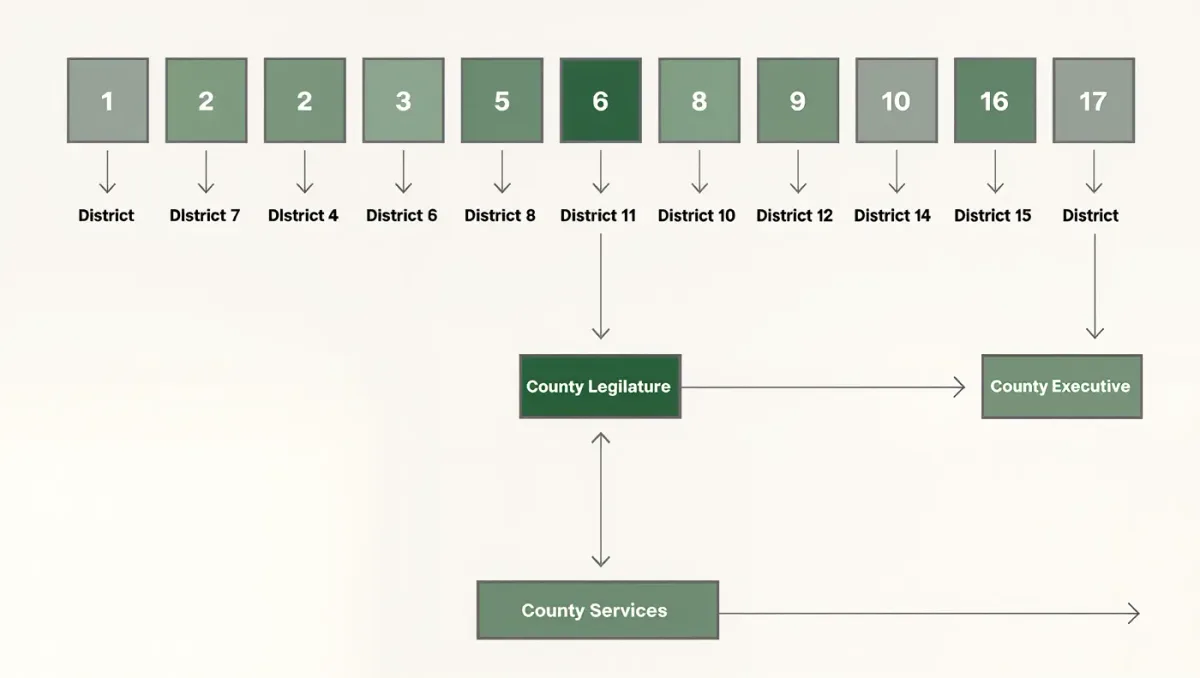
Rockland is divided into 17 legislative districts, and each district elects one legislator to a two-year term. New City and its surroundings are split among several districts; so are Ramapo's villages and the river towns. A chair and vice chair are chosen by the members themselves at the start of each year, and most real work happens in standing committees — budget, public safety, health, public works — that meet before the full legislature votes.
How a proposal becomes a law
Most items start as a resolution drafted with the county attorney or a department, get assigned to a committee, and come to the full legislature only after the committee reviews them. Here is the typical path:
- A legislator or county department sponsors a resolution, which is filed with the clerk of the legislature.
- The resolution is placed on a committee agenda; committee members question department heads and can amend or hold it.
- Committees that approved it forward the item to the full agenda for a regular meeting.
- At the meeting, the public is invited to comment before the vote under the legislature's rules.
- The 17 members vote. Most ordinary resolutions need a simple majority; some items, such as certain bonding or charter matters, need a supermajority under state law or the county charter.
- Passed local laws go to the county executive, who can sign or veto them; a veto can be overridden by a larger vote of the legislature.
Where and when meetings happen
The legislature meets in the legislative chambers at the Allison-Parris County Office Building in New City, and regular meetings follow a published calendar. Agendas are posted in advance on the legislature's page on the county website, and minutes are added after each session. Committee meetings are open to the public too, and they are often where the detailed back-and-forth actually happens.
How to speak at a public hearing
Regular meetings include a public comment period, and separate public hearings are held by law for things like the budget and proposed local laws. Show up a few minutes early, sign in as directed by the clerk, and keep your remarks to the time limit announced — usually two to three minutes. Address the chair, not individual members, and expect a written record: your comment becomes part of the minutes.
If you cannot attend, agendas and minutes are the best substitute, and most meetings are recorded. Watching one full session — even a slow one — is the fastest way to learn who moves which item and where the debate happens.
Committees: where the real scrutiny happens
If you only watch the full legislative sessions, you will see clean votes with little debate, because the argument already happened. Each resolution is assigned to a standing committee whose members can summon department heads, question the budget office and send items back for revision. Budget and Finance is the heavyweight, especially in the fall, when the executive's proposed budget gets walked through line by line. Public safety, health, planning and public works committees cover their departments for the rest of the year.
Committee meetings are public under New York's Open Meetings Law, and their agendas are posted alongside the full-board ones. For a resident tracking a specific contract or appointment, the committee stage is usually the best moment to weigh in — questions raised there tend to be answered before the vote, not after.
Reading a legislative agenda without getting lost
County agendas look dense at first because nearly everything is a numbered resolution, not a plain-language motion. The trick is to read the resolution titles: each one names the department, the dollar amount where money is involved, and whether it is a local law, a contract, an appointment or a budget amendment. Items marked as hearings require public comment by law; the rest are still voted on in open session.
Terms that confuse newcomers are simpler than they sound. A bonding resolution authorizes borrowing for a capital project, and it appears on the agenda long before construction starts. A budget transfer moves money between lines the legislature already approved. A home rule request asks the state legislature in Albany to pass a law affecting Rockland specifically — which is how the county handles matters it cannot decide on its own.
Why 17 votes matter to your street
County decisions reach further than residents often assume: the sheriff's patrol levels, the county share of road projects, senior programs and health inspections are all budget lines the legislature votes on. Because districts are small enough that one legislator represents a few thousand households, a handful of calls to a district office genuinely registers. The legislature's own page lists each member's district map and contact information, which is the place to start before a budget or hearing that affects you.