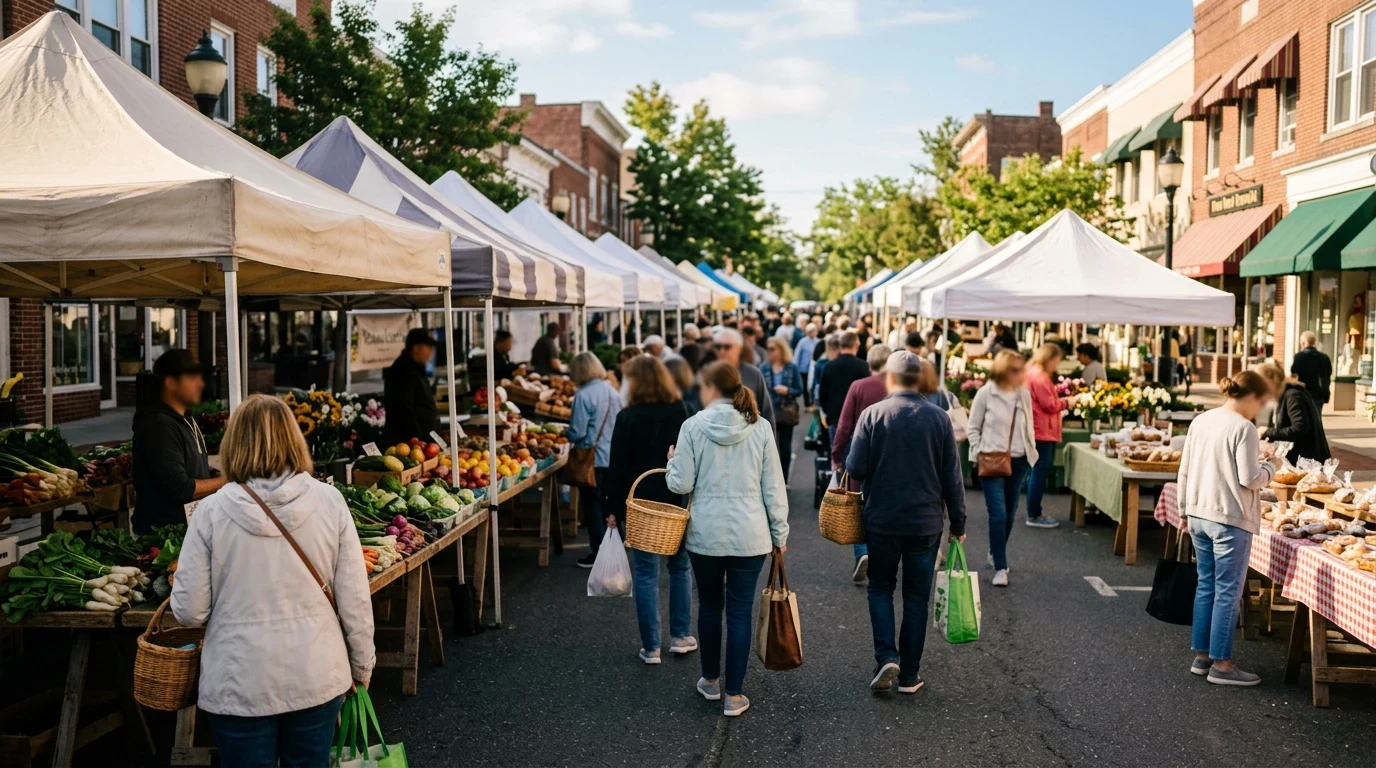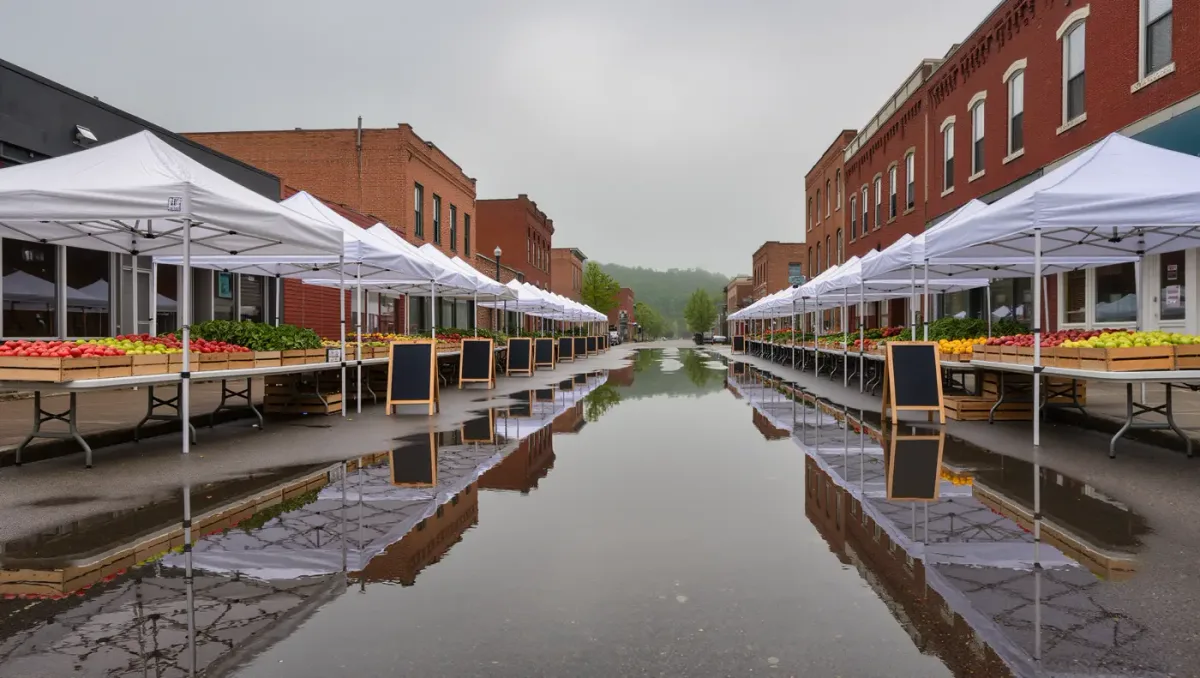
On market day in downtown Suffern, Lafayette Avenue turns into a produce aisle. The Suffern Farmers Market is the best-known weekly market in western Rockland County, and it anchors a wider seasonal circuit that also serves communities like Nyack, New City, Spring Valley and Haverstraw. If you have never shopped one, the mechanics are worth knowing — including how benefits like SNAP work at the tents.
Who runs the markets?
Rockland's farmers markets are not one organization. Some are run directly by a village, some by a business improvement or downtown association, and some are operated by an outside market management company hired by a municipality. The Suffern market, long a fixture of the village's Saturday calendar, operates in the village downtown under municipal oversight, while other markets in the county follow their own management structures.
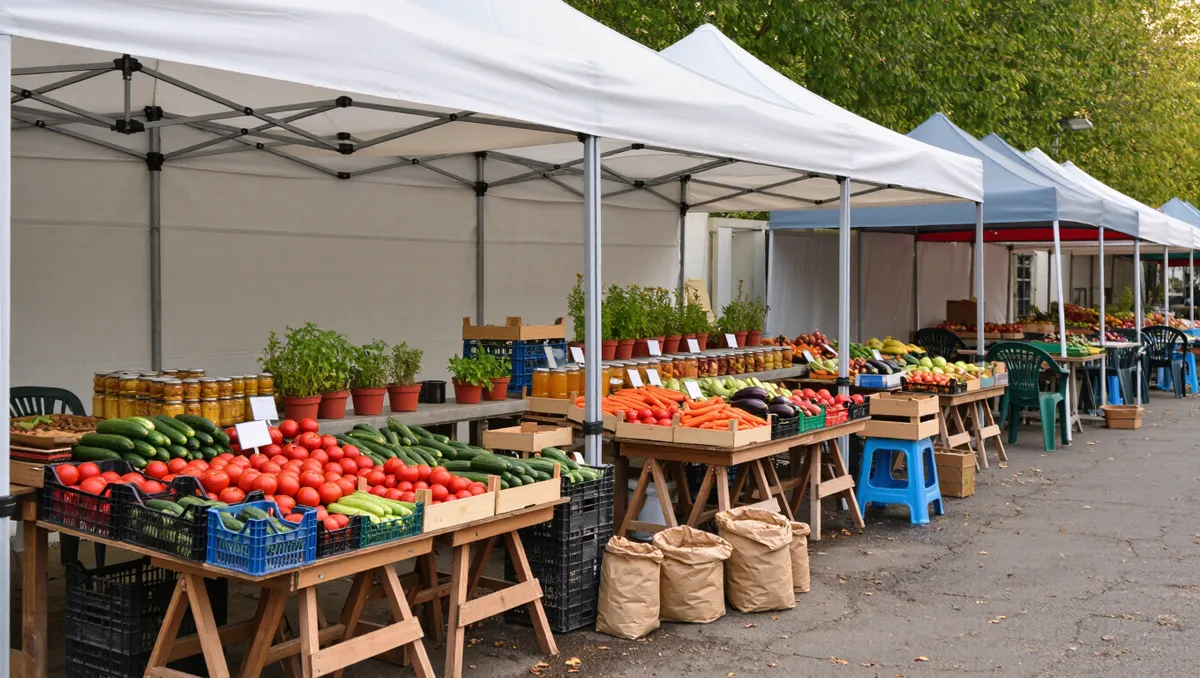
What they share is a vendor model: farms and food producers pay for weekly stalls, the market manager sets the rules on what can be sold and where vendors come from, and most markets emphasize the state's definition of a farmers market — food grown or produced by the people selling it, not resold wholesale produce.
When do the seasons run?
Most Rockland markets run a warm-weather season, typically opening in late spring and closing in late fall, with exact dates set each year by the market's operator rather than fixed by law. A few markets extend into a winter schedule — often indoors or on a reduced monthly calendar — so check the current season's dates with the operator before planning around one.
Within the season, expect variation by month. Early weeks bring greens, seedlings and stored crops; midsummer is the peak for vegetables, berries and cut flowers; the fall weeks shift toward apples, cider, squash and root vegetables. Baked goods, eggs, honey, fish, coffee and prepared foods usually run the full season.
How do SNAP and other benefits work?
Farmers markets in New York are set up to accept SNAP EBT, and the mechanics are the same across the state.
- Visit the market manager's table, the standard entry point for EBT transactions at most markets.
- Swipe your EBT card for the amount you want to spend.
- Receive tokens or scrip to spend with participating vendors.
- Shop as usual; tokens generally buy SNAP-eligible foods such as produce, eggs, bread and other staple foods.
Two things are worth knowing. First, not every vendor accepts tokens — look for the posted signs at participating tents, and ask the manager if you are unsure. Second, New York runs incentive programs in many seasons that stretch SNAP dollars at markets, such as the Fresh Connect Checks program administered through the state, which provides matching coupons for produce purchases at participating markets. Availability varies by market and year, so ask at the manager's table what the current stretch is.
Senior farmers' market nutrition program vouchers, distributed to eligible older adults through county channels in summer, work at participating farm vendors as well.
What makes Suffern's market the anchor
Suffern's market benefits from geography as much as agriculture. The village sits at the meeting point of major Rockland roadways and a New Jersey Transit rail line, which means market day draws shoppers from across the county and across the state line, not just from the village itself. Vendors notice that: a stall in Suffern reaches a bigger audience than a stall in a smaller village square, which is why the market tends to attract returning farms season after season.
The downtown setting does the rest. Pairing the market with Suffern's shops and restaurants turns a produce run into a reason to spend the morning in the village, and the village treats it that way — scheduling other programming on market days when it can, and promoting the market as part of the downtown identity.
Why does it matter for Rockland?
Markets do two jobs at once. For shoppers, they put farm-level produce within a short drive of every town in the county, from Suffern's downtown to the river villages. For the region's surviving farms — in Rockland's western edge and across the Hudson Valley — the weekly stall is direct revenue without a middleman, which is why municipalities treat their markets as both food access infrastructure and downtown foot traffic.
What about farm stands outside the markets?
Markets are not the only outlet. Rockland still has working farm properties on its western side that sell from stands on their own land, and roadside produce sales appear seasonally across the county, particularly toward the spring and fall harvests. The trade-off is different from a market: a farm stand offers one operation's produce rather than a dozen vendors under one roof, but often with longer hours and no season-end date until the fields are done.
For households planning a weekly routine, the two complement each other. The market covers variety and the benefit programs; the farm stand covers surplus crops at their peak. Both keep food dollars inside the Hudson Valley farm economy, which is the point county market operators make every season when they ask residents to shop local first.
How to shop one well
A few habits make the difference between a nice stroll and a working market trip:
- Come early for the best selection, especially at small-stall markets; come late for end-of-day deals at vendors who would rather not pack it home
- Bring cash as well as cards — some vendors are cash-first even where EBT and cards are accepted at the manager's table
- Ask where the farm is. The answer is the actual product of the market, and it tells you which vendors are local growers versus food artisans
- Check the operator's website or social media for season dates, weather cancellations and special event days
Whether you are spending EBT dollars or just looking for tomatoes that were picked that morning, the market's manager can answer everything else on the spot. That table, not the vendor tents, is the information desk for the whole operation.