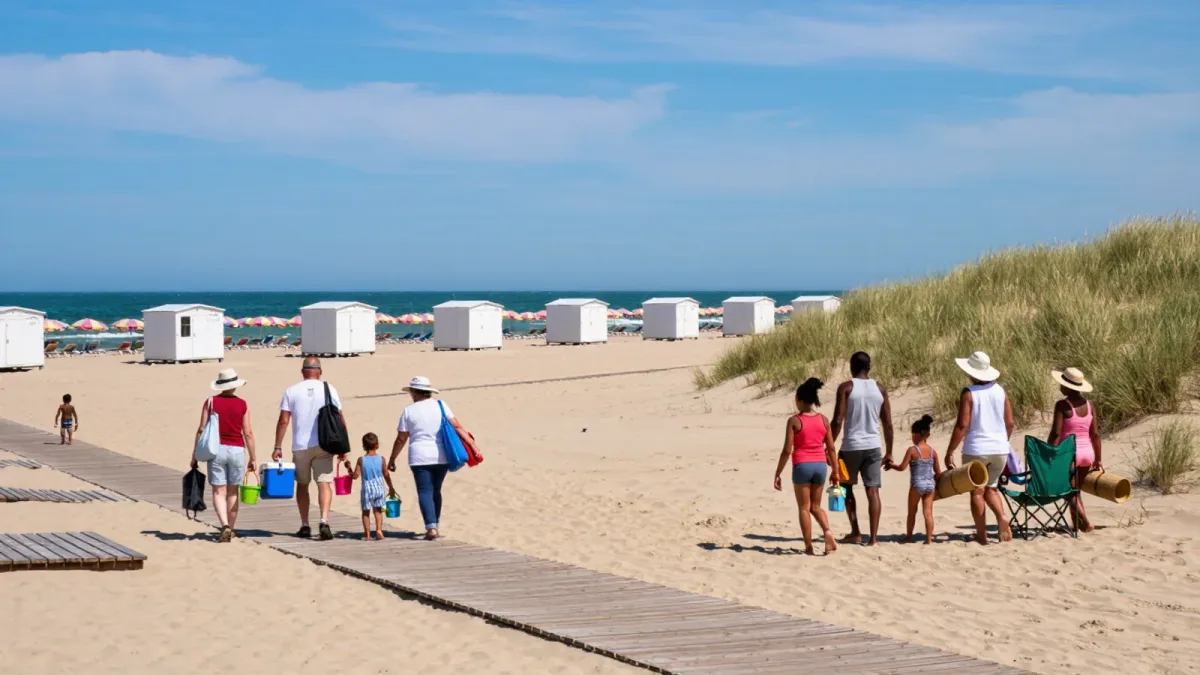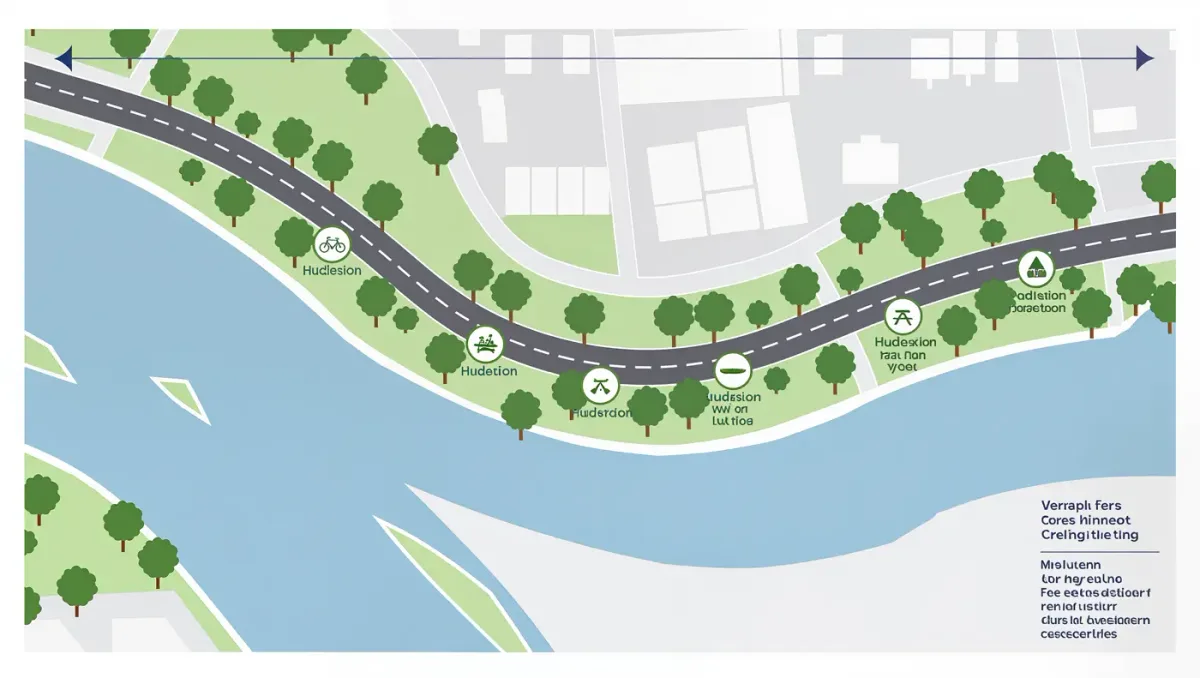
Follow Route 9W along the Palisades on a warm Saturday and the economy explains itself: bicycles headed for Hook Mountain, kayaks on roof racks at Nyack Beach, families crossing toward the river in Haverstraw, and picnic traffic turning toward Stony Point. Rockland County's Hudson riverfront is its tourism product, and the businesses that line it — restaurants, ice cream stands, outfitters, antique shops and cafes — live on the visitors the parks and launches bring in.
Hook Mountain and Nyack Beach: the day-trip engine
Hook Mountain State Park and adjacent Nyack Beach State Park form the corridor's anchor. The riverside path at the base of the Palisades draws cyclists, runners and hawk-watchers each fall, when Hook Mountain is one of the region's known spots to count migrating raptors. Parking is limited and access runs through the villages — which is the point. Day-trippers arriving for the parks spill into Nyack's Main Street and Piermont's riverside strip for lunch, coffee and gear, spending that would not otherwise reach Rockland.
Nyack: the waterfront village that monetized the view
Nyack turned its Memorial Park waterfront, public boat launch and walkable downtown into a single package: park the car, watch the river, then walk to dinner. Seasonal events on the waterfront and a steady calendar of festivals and antiques weekends keep the village on regional lists of Hudson Valley day trips. Riverfront dining rooms facing the Gov. Mario M. Cuomo Bridge sell the view as part of the meal — a premium no inland restaurant can charge.
The cycling culture deserves its own line in the ledger. Route 9W through Upper Grand View, Grand View and Piermont is a regional ritual for New York City riders on weekend mornings, and the corridor's cafes have learned the math: a bike rack out front on a Sunday morning is worth a second espresso machine. Piermont adds Tallman Mountain State Park and its long pier into the bargain, giving the southern end of the corridor its own draw separate from Nyack's.
Rockland Lake rounds out the park cluster. Rockland Lake State Park, with its golf courses, pool and walking loop around the lake itself, sits just north of Hook Mountain and pulls family traffic that the riverside path doesn't — youth sports, swimmers and golfers who also eat lunch in Valley Cottage and Congers on the way home.
Haverstraw: brick heritage as a draw
Haverstraw spent the 19th century as the brickmaking capital of the Hudson River, shipping bricks to build New York City, and its revitalized riverfront leans on that history. Empanada wagons and Dominican restaurants along Main Street — a legacy of the village's community — have become a food destination in their own right, drawing Manhattan food writers across the bridge. The riverside park and village marina give visitors a reason to linger after lunch.
Stony Point: history at the river's bend
The Stony Point Battlefield State Historic Site preserves the 1779 Revolutionary War battlefield on a promontory above the Hudson, with a museum, walking trails and seasonal programming including evening lantern tours. The lighthouse at the site, dating to 1826, is among the oldest on the river. History tourism runs on smaller daily receipts than the parks but extends the corridor's reach north and keeps visitors on the 9W stretch through town.
The funding loop
None of this infrastructure maintains itself, and the money trail matters for taxpayers. State parks along the corridor are funded and staffed by the Office of Parks, Recreation and Historic Preservation; village waterfront parks and marinas are municipal budget lines; and towns and villages that want to upgrade their waterfronts often apply through New York's Local Waterfront Revitalization Program, which funds planning and construction along navigable waters, per the state Department of State. Every grant awarded to a riverfront trail or dock is, in effect, a subsidy to the storefronts a few blocks inland.
How the river dollars actually land
The spending pattern is consistent across the corridor. Public parks and sites provide the free or low-cost draw; the villages capture the secondary spending on food, drink and retail. A family that spends nothing at Hook Mountain still buys lunch in Nyack. Kayak rentals, bicycle traffic and seasonal events extend the season beyond summer weekends into spring and fall. The shoulder seasons are where the multiplier shows: a hawk-watch crowd in October or a lantern tour in June spends on the same storefronts that summer beach-and-launch traffic does, which is why village chambers have pushed to spread events across the calendar rather than stacking them in July and August.
For business owners, the practical playbook is visibility along the corridor and hours that match visitor traffic: open on weekends when the parks fill, market to the NYC audiences that arrive by car across the Cuomo Bridge or by bus tours, and partner with the parks' event calendars. For towns, the lesson of the last two decades is that river access — parks, launches, walkable connections from Main Street to the water — is economic development. Haverstraw's riverfront apartments, Nyack's steady hotel occupancy on weekends and the summer queues outside Piermont's restaurants all trace back to the same investment logic: build the public waterfront, and private revenue follows Every improved trailhead or waterfront park translates into customers for somebody's storefront.
The river built Rockland's towns; today it also underwrites their shopkeepers. From the hawk watch at Hook Mountain to the lantern tours at Stony Point, the Hudson remains the county's most reliable visitor attraction, and the businesses clustered along it are the proof.