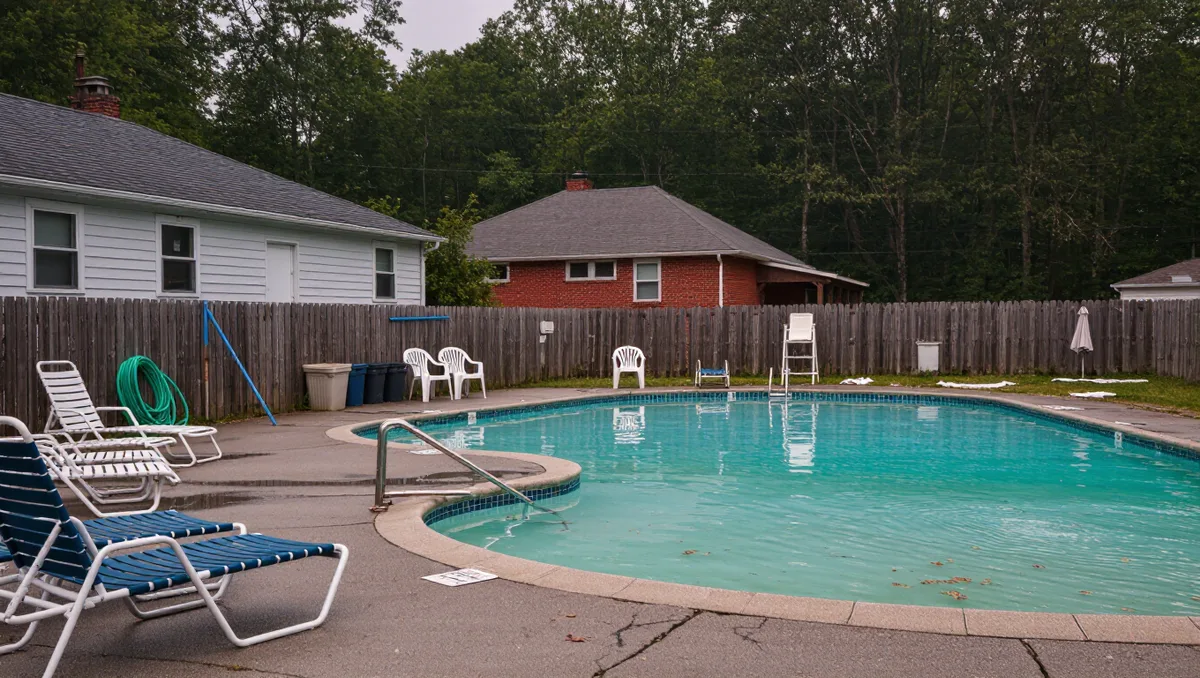
Rockland County has no single countywide pool system. Each town and village that runs a pool sets its own opening date, its own fees, and its own sign-up rules for swim lessons. Most pools open in late June, after the school year ends, and run through Labor Day weekend, though the exact dates change every summer.
That means the practical answer for families is simple: the pool you can use, and what it costs, depends on where you live. Residency is the dividing line everywhere. A resident of one town generally cannot buy a season pass at another town's pool, and some village pools limit access to village residents only.
This piece explains how the season typically works, what passes and daily rates usually look like, and how swim lesson registration actually happens. It also flags the one habit that saves the most trouble: checking your own town's parks and recreation page before the season starts, because the details live there and nowhere else.
Who actually runs the pools?
Municipal pools in Rockland are run by town or village recreation departments, not by the county. That matters for two reasons. First, each department sets its own fee schedule, and the town board or village board votes on it as part of the annual budget process. Second, each department decides who counts as a resident, which usually means anyone living within that town's or village's boundaries, sometimes with proof required. This connects to our earlier piece, Rockland County's summer concert series: how the schedules come together and what to know before you go.
Some communities also have private or neighborhood pools — swim clubs and homeowners' association pools — that operate on entirely separate memberships. Those are not covered by town passes. If your question is about a club pool, the club itself is the only reliable source for hours and fees.
The word itself is doing quiet work here. As Merriam-Webster defines it, a community is a body of people with common interests living in a particular area — and a municipal pool is one of the clearest expressions of that idea, a shared amenity funded and priced for the people who live around it.
When do pools open, and when do they close?
The pattern across most municipalities in the region is a late-June opening, once schools are out, with full daily operation through the summer and reduced hours or weekend-only operation after the late-August back-to-school stretch. Labor Day weekend is the common closing point. But this is a pattern, not a rule, and no town's dates carry over from one year to the next without confirmation.
Weather shortens seasons too. A cool, rainy June can push an opening back. A staffing shortfall — lifeguards are the perennial constraint — can limit hours or close a pool on short notice. Municipal pools around the country have had trouble filling lifeguard positions in recent summers, and Rockland is not immune to that pressure.
The reliable move is to look for the announcement, not the pattern. Recreation departments post opening dates and hours on their own pages, and those pages are the primary source. A phone call to the recreation office works too, and the clerks who answer generally know the details before the website catches up.
What does a season pass cost?
Here is where precision has to give way to honesty: this publication does not have a verified fee schedule for every pool in the county, and fees change from year to year. What can be said with confidence is the structure. Most municipal pools charge residents a flat season pass per individual or per household, charge non-residents more or exclude them entirely, and offer a reduced daily admission for occasional visits. Many offer a lower rate for children, seniors, or early-bird purchases before opening day.
Two practical notes follow from that structure. First, the early-bird deadline is often the cheapest day of the season to buy a pass, and it usually falls before the pool opens — so the deadline, not the opening date, may be the date that matters for your wallet. Second, a household pass versus individual passes is a real arithmetic problem for families with two or three swimmers; it is worth running the numbers both ways against your town's posted rates.
Fee schedules are adopted publicly. If you want to see where your pool's rates came from, the adopted budget and the recreation department's fee schedule are public documents, and government coverage on this site regularly explains how those budget votes work.
How do swim lesson sign-ups work?
Swim lessons are the most competitive part of the pool season, and the mechanics are similar everywhere. Registration opens on a set date, often in late spring, well before the pool opens. Spots fill fast, especially for the youngest age groups, because classes are small — a handful of children per instructor is the norm for beginner levels, for safety reasons that need no citation.
Most departments run lessons in multi-week sessions through the summer, with morning slots before the general swim hours. Registration is increasingly online, though some offices still process in-person or mail-in forms, and a few run resident-only registration windows before opening any remaining spots to non-residents.
Our analysis of how these sign-ups go wrong comes down to one thing: families who miss the registration date assume there will be a second chance, and often there is not. The practical steps are short. Find your recreation department's page early. Note the registration date and the resident window. Create any required online account before the date, not on it. And have a second-choice time slot in mind, because the first one may be gone within minutes.
What else should families know before the first visit?
A few housekeeping items catch first-time visitors by surprise. Many pools require a photo ID or a resident card at the gate, every visit, not just at pass purchase. Most prohibit outside food and coolers, or restrict them to a picnic area. Guest policies — whether a resident can bring a non-resident guest, and at what price — vary widely and are worth checking if you plan to bring cousins or grandparents.
Pool rules on floats, swim attire, and diaper-age children in the main pool are standard but enforced locally, and the lifeguard's word is final. That is not bureaucracy for its own sake; it is how a shared facility stays safe for everyone in it.
It is also worth keeping the pool in the wider summer context. A pool is one item on a long seasonal calendar, and the same recreation departments that run pools also run concerts, markets and movie nights. The Rockland County's summer concert series guide and the summer farmers market calendar cover two of the biggest ones, and the Rockland's event calendars, explained piece shows how all of these schedules fit together.
What this means for your summer
The evidence here establishes the structure: pools are municipal, residency governs access, fees are set through the budget process, and lesson registration is a dated, competitive event. What remains unknown, until each department publishes it, is the specific detail every family actually needs — this summer's dates and rates for your town's pool.
So treat this as a checklist rather than a summary. Identify which municipality's pool you are entitled to use. Find that recreation department's page and the registration date for lessons. Compare the household pass against individual passes at the posted rates. And if the page has not been updated yet, call the office — the person who answers has almost certainly already been asked the same question this week.