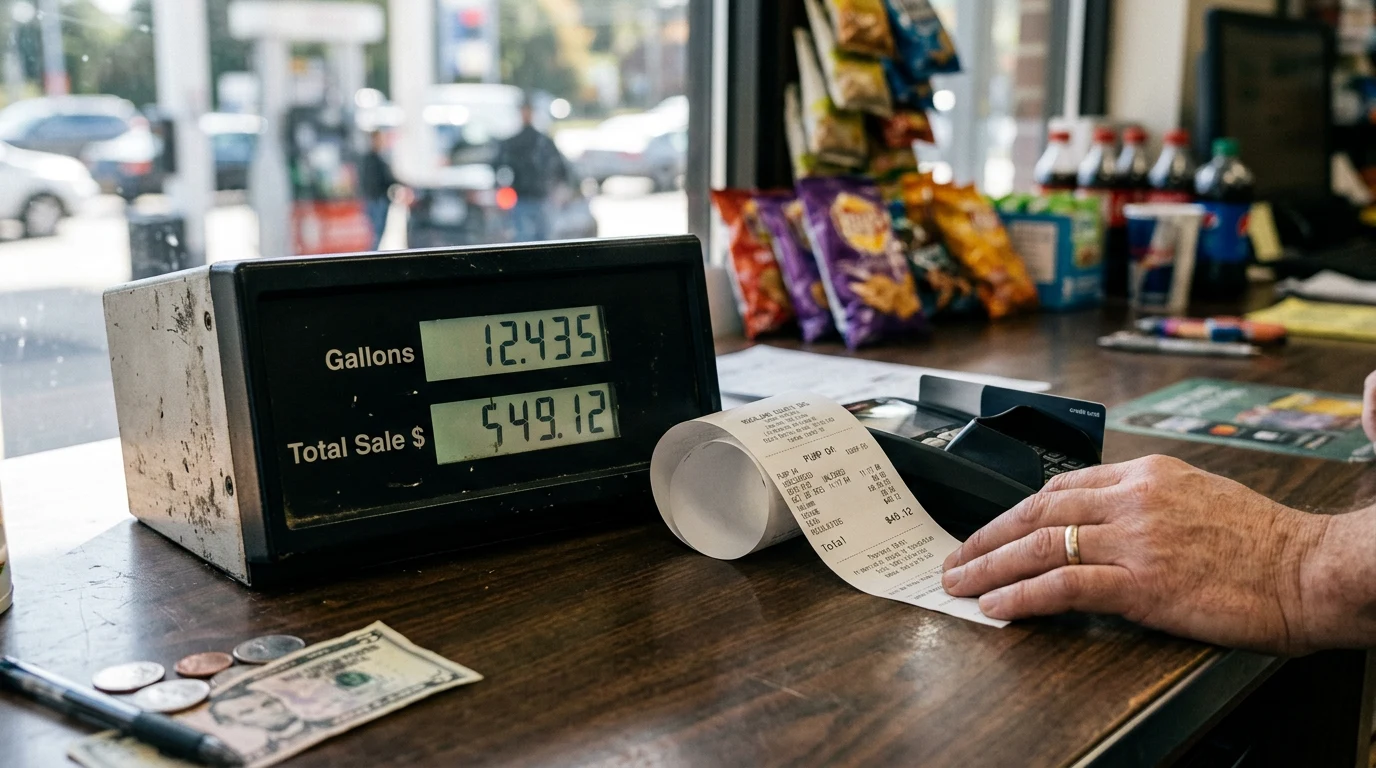
Rockland County's combined sales tax rate is 8.375% — a New York State rate of 4%, a county rate of 3.75%, and a 0.375% surcharge for the Metropolitan Commuter Transportation District, according to the county's Finance Department and the state Tax Department. Gasoline is currently an exception: the county caps its share at the first $3 of every gallon through March 1, 2027.
What is Rockland County's sales tax rate right now?
Shoppers and business owners in every Rockland municipality — from New City to Suffern to Spring Valley — pay 8.375% on most taxable purchases, whether the transaction happens in a Nyack storefront or a Haverstraw restaurant. That figure combines New York State's 4% statewide rate with Rockland's own local add-ons, all listed in the state's official jurisdiction schedule, Publication 718.
The rate applies countywide; New York does not let towns or villages set their own separate general sales tax on top of it. A business owner opening a shop in any Rockland town charges the same 8.375%, with one notable carve-out for fuel described below.
Where does that 8.375 cents on the dollar actually go?
The county's Finance Department breaks the total into five pieces. Understanding the split matters for business owners trying to explain the number to customers, and for residents curious where the money lands.
| Recipient | Share of the rate |
|---|---|
| New York State | 4.00% |
| Rockland County | 3.75% |
| MCTD surcharge (state-collected) | 0.375% |
| Towns and villages (population share) | 0.125% |
| Towns and villages (police share) | 0.125% |
The county's local 3.75% and the town-and-village shares together make up the "local" portion residents usually mean when they talk about county sales tax; the state and MCTD pieces are set outside county government's control.
What is the MCTD surcharge, and why does Rockland pay it?
The Metropolitan Commuter Transportation District tax is an extra 0.375% that New York State layers on top of the base rate in the counties inside the MTA's service area — New York City plus Dutchess, Nassau, Orange, Putnam, Rockland, Suffolk, and Westchester counties, according to the state Tax Department. It funds regional transit rather than county services, which is why it shows up as a separate line even though shoppers pay it as part of the same 8.375% total at the register.
Rockland has carried the MCTD surcharge since the state expanded the district's boundaries decades ago, and county officials have no authority to remove it — only the state Legislature can change MCTD-related rates.
Why is gas taxed differently through next spring?
Since June 1, 2026, Rockland County has capped the county's 4% share of the sales tax on gasoline so that it applies only to the first $3 of the price per gallon, rather than the full pump price. County Executive Ed Day said the change was meant to give drivers relief as prices climbed toward $5 a gallon this year, telling residents that "when prices rise, government's role is to provide relief, not profit." The county estimated the cap saves roughly $1.60 per fill-up when gas is priced around $5 a gallon.
The cap, approved unanimously by the County Legislature, runs through March 1, 2027, and touches only the county's own share of the tax. The state excise tax and the MCTD assessment on gasoline are unaffected, so drivers still see those charges at the pump even while the county's cut shrinks on higher-priced gas.
For gas station owners and fuel distributors, the practical effect is a lower blended tax collected on every gallon above the $3 threshold — worth noting for anyone reconciling county sales tax remittances between now and next spring.
How can a business make sure it's charging the right rate?
New York's Tax Department puts the responsibility on the seller. Businesses that collect sales tax are expected to confirm the correct combined rate and jurisdiction code for every sale, which can matter for a Rockland business that ships or delivers outside the county.
- Use the state's online Jurisdiction/Rate Lookup by Address tool for the exact delivery location.
- Cross-check the rate against Publication 718, the state's official rate schedule by jurisdiction.
- Confirm whether the sale is delivered or picked up within Rockland, since the delivery address — not the seller's location — usually governs which local rate applies.
- Remember gasoline's temporary county cap when reconciling collections through March 1, 2027.
The state explicitly warns that getting the rate or jurisdiction code wrong is the collecting business's responsibility, not a matter it will sort out after the fact.
Has the overall rate changed recently?
The 8.375% combined rate has been in place since 2008, according to county figures, and the state's most recent jurisdiction schedule confirms it remains current as of publication. The only recent adjustment is the temporary, gasoline-specific county cap that began June 1, 2026 — the general rate on everything else has not moved.
Frequently asked questions
Does the 8.375% rate apply the same way in every Rockland town and village?
Yes. New York State sets one combined rate for the whole county, so a purchase in New City, Nyack, Suffern, or Spring Valley carries the same 8.375%, with the state and MCTD pieces fixed by Albany rather than local officials.
Who actually collects the MCTD portion of the tax?
The state collects the 0.375% Metropolitan Commuter Transportation District surcharge along with the rest of the sales tax; it isn't billed separately, but it's baked into the 8.375% total charged at checkout.
Does the gas tax cap lower the price at the pump automatically?
It lowers the county's share of tax charged on gasoline priced above $3 a gallon, which reduces what a driver pays in tax at checkout — the county estimated about $1.60 in savings per fill-up when gas runs near $5 a gallon.
When does the gas tax cap expire?
The cap took effect June 1, 2026, and is set to run through March 1, 2027, after which the county's full sales tax share on gasoline would apply again absent further action by the County Legislature.
For more context, read How a 1031 Exchange Lets Landlords Defer Capital Gains Tax.
For more context, read The 45-Day and 180-Day Rules That Govern a 1031 Exchange.
For more context, read How Newark's Rent Control Board Limits Annual Rent Increases.